Catching a Falling Knife or a Big Opportunity in DOT Cryptocurrency
Polkadot DOT shows why a falling price and a failing project are not the same thing. DOT reached an all-time high of about $54.98 in November 2021 before entering a long decline. By September 2026, the token had begun to recover from deeply depressed levels, renewing the debate over whether it was becoming a contrarian opportunity or remaining a falling knife.
This article assesses DOT with information available through 19 September 2026. It focuses on Polkadot utility, recent market performance, growth drivers, competition and the balance between potential upside and downside.

What Polkadot Is
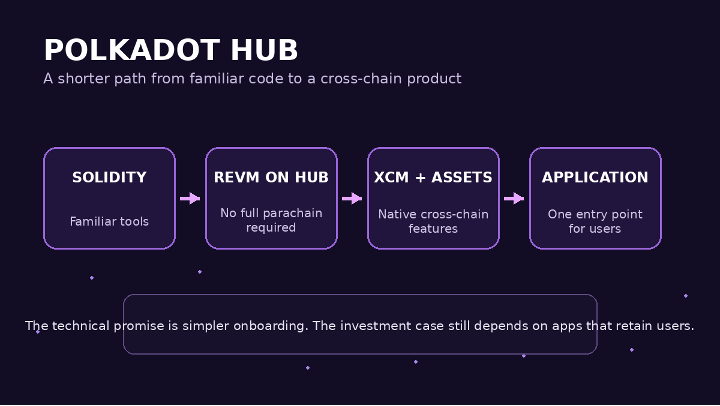
Polkadot is a blockchain network designed to connect specialized chains and provide shared infrastructure. Its architecture emphasizes blockchain interoperability, shared security and flexible access to computing resources. Instead of operating only as another stand-alone smart-contract chain, Polkadot is intended to support multiple applications and networks that can exchange information securely.
DOT cryptocurrency is the network's native token. Holders can use DOT for staking and governance, while projects use it to obtain network resources through Polkadot Coretime. These functions give DOT utility beyond short-term trading.
Market Position on 19 September 2026
During September 2026, the Polkadot price moved from below $1 toward the $1.20 area. Market data available by 19 September placed DOT around $1.10 to $1.20 after a sharp multi-session recovery. The $1 level had become an important psychological threshold, while the area near $1.20 acted as short-term resistance.
The recovery matters because it followed an extended period of weakness. It does not, however, make the 2021 high a reasonable base case. A token can look heavily discounted and still fall further if adoption, liquidity or market sentiment deteriorates.
The 21Shares Polkadot Staking ETF TDOT began trading on Nasdaq on 6 March 2026. By the research cut-off, it offered U.S. investors an exchange-traded route to spot DOT exposure. That access can support visibility and liquidity, but the existence of an ETF does not guarantee sustained inflows or a lasting rise in the token price.
Why DOT Could Be a Big Opportunity
The strongest part of the Polkadot investment case is the network's continuing infrastructure role. Interoperability may become more valuable if the crypto market remains divided among specialized chains that need secure ways to communicate.
Coretime is another potential catalyst. It allows projects to obtain blockspace more flexibly instead of maintaining a permanent dedicated resource. If network use rises, demand for this infrastructure could create more economic activity around DOT.
Valuation also creates potential upside. DOT's market capitalization remains far below that of the largest crypto networks. If developer activity and user demand improve, a smaller starting valuation leaves room for substantial percentage gains. That is potential, not a forecast.

Why DOT Could Still Be a Falling Knife
A low token price does not automatically mean a low valuation. DOT remains a high-risk crypto investment and can experience another large percentage decline even after a severe correction.
Competition is a major concern. Polkadot competes for developers, users, liquidity and applications with Ethereum, Solana and many other blockchain ecosystems. Strong technology will not be enough if projects and capital concentrate elsewhere.
Token economics deserve equal attention. Investors should consider supply growth and staking rewards together rather than treating a high staking yield as a return without cost. Cryptocurrency volatility can also make poor timing expensive, while leverage and CFDs can magnify losses.
Investment Opportunity Ranking
Factor | Assessment | Reason |
Technology | Strong | Interoperability and shared blockchain infrastructure |
Utility | Medium to high | Staking, governance and access to network resources |
Valuation | Potentially attractive | Large historical decline and a smaller market size |
Growth potential | High but uncertain | Depends on sustained ecosystem and developer adoption |
Competition | High risk | Many networks compete for users, capital and developers |
Volatility | Very high risk | Crypto prices can move sharply in either direction |
Overall opportunity | 7 out of 10 | An interesting speculative recovery opportunity with substantial risk |
Possible Scenarios
Bullish scenario DOT holds above $1, breaks through the resistance area near $1.20 and attracts sustained demand alongside stronger network activity. That combination would provide better evidence of a broader trend reversal.
Neutral scenario DOT remains near the $1 to $1.20 range while investors wait for clearer adoption data. In that environment, patience may be more sensible than chasing a short-term move.
Bearish scenario The recovery fails and DOT falls below $1 again. Such a move would suggest that the September rally was a temporary rebound rather than the start of a durable change in trend.
Bottom Line
As of 19 September 2026, DOT is best described as a high-risk recovery opportunity rather than a confirmed turnaround. Polkadot has real technological utility and several potential catalysts, but the investment case depends on whether the network can convert its design into sustained adoption and economic activity.
Successful contrarian investing requires more than buying an asset because it has fallen sharply. Investors need evidence that the project remains relevant and that demand can return. DOT has enough positive factors to justify attention, but its risk still makes disciplined position sizing and risk management essential.
Overall investment opportunity rating 7 out of 10. The upside could be substantial, but the probability of a large loss remains high. This score is an analytical assessment, not a guarantee or personal investment recommendation.
Sources:
This article is for informational purposes only and does not constitute investment advice.