
NIO and the Future of Battery Swapping How Battery Swap Deals Could Change the EV Market
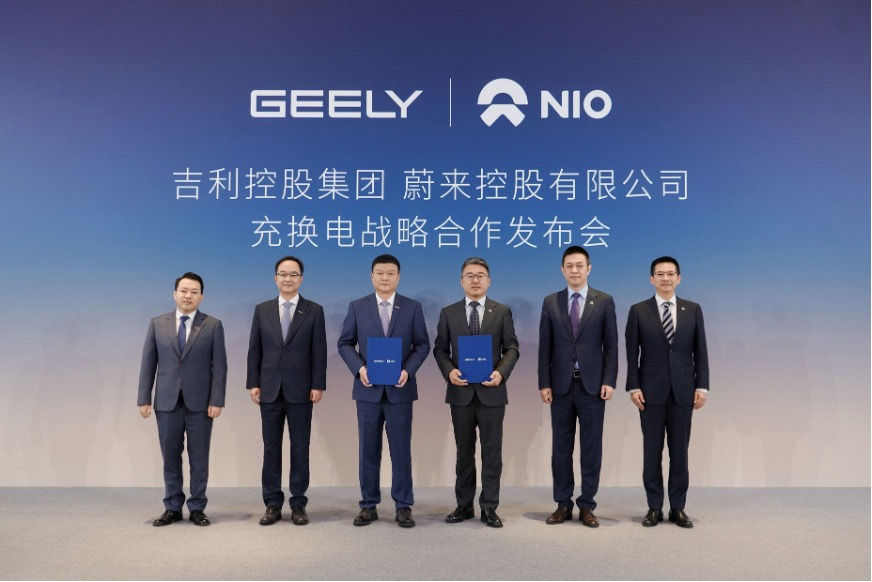
NIO’s latest deal with Geely gives battery swapping a new test: can a network built by one carmaker become useful to many? Announced on 28 September, the agreement combines an investment in NIO Power with plans to share technology, connect charging networks and serve future Geely vehicles. The transaction still needs regulatory clearance, and the vehicle plans require further work. Even so, it offers a clearer route from a convenient NIO feature to shared EV infrastructure.

What Is Battery Swapping
At a swap station, a driver trades a depleted battery for a charged one. The removed pack stays at the station to be inspected and recharged for another vehicle. NIO says its fourth-generation station can complete the automated operation in 144 seconds; the full stop may take longer if the driver must wait, enter or exit the site. A charger instead replenishes the battery already in the car. Charging time depends on the vehicle, battery temperature, charging curve and available power. Both methods also depend on convenient sites and reliable equipment.
NIO Battery Swap Strategy
NIO has spent years building a network around cars designed for removable packs. Its Battery as a Service, or BaaS, model lets customers buy a car without buying its battery and pay for battery access through a subscription. This separates the vehicle’s upfront price from the battery and can make capacity upgrades easier, though the ongoing fees still matter to total ownership cost. By 27 September 2026, NIO reported 4,126 Power Swap Stations and more than 125 million cumulative swaps in China. Those figures show usage at scale, although they do not tell us whether every station is profitable.
The New Battery Swap Deal
Under the signed agreements, Geely will contribute its Yiyi Power commercial-vehicle swapping business plus RMB 640 million in cash in exchange for a proposed 30% stake in NIO Power. NIO China would retain 63.6%, with an existing investor holding 6.4%; NIO puts NIO Power’s post-money valuation at about RMB 16 billion. The stake may change under performance conditions, and Geely has an option for a further investment. These are transaction terms, not cash already received or a completed transfer. The partners plan to integrate Yiyi Power’s commercial operation, develop common swapping standards for passenger vehicles and serve future Geely models through NIO Power. NIO also plans to take a 10% stake in Geely’s Haohan Energy charging business and connect the two charging networks. Specific compatible models and rollout dates have not yet been finalized.
Potential Benefits for EV Drivers
The practical benefit is less time spent stationary on a trip when a compatible station has a charged pack available. BaaS can reduce the initial purchase price, while managed batteries give the operator a chance to monitor their condition. A shared network could also give more drivers access to stations already built. Each benefit depends on the price of the subscription and swaps, nearby coverage and actual vehicle compatibility.
Challenges of Battery Swapping
A swap network requires buildings, machinery, grid connections and a stock of costly batteries. Operators must keep enough charged packs at each site without tying up too much inventory. Vehicles also need compatible pack dimensions, mounting points, electrical systems and software. A partnership to design common standards is a step toward this goal, but it does not make existing cars interchangeable overnight. Demand is the other constraint. Busy stations can spread their fixed costs across more swaps; lightly used ones may struggle. Geely’s commercial fleets could help utilization because their routes and schedules are more predictable, but the financial impact will depend on execution and driver uptake.
Battery Swapping Versus Fast Charging
Fast charging keeps improving. The IEA estimates that a compatible car can gain almost 180 km of range in 15 minutes on a 150 kW charger, but says only a minority of battery-electric cars can use the highest charging speeds. A swap’s mechanical time and a charging session’s energy gain are different measures, so either option can be more convenient depending on the journey.
What Could This Mean for the EV Industry
The interesting question is whether the partnership produces vehicles that actually use a shared standard. If it does, other manufacturers could gain access to an established network instead of funding one alone. Battery makers and fleet operators might then have a stronger reason to agree on common pack designs. This is a possible industry effect, rather than an outcome promised by the deal.
The Future of NIO and Battery Swapping
NIO says it aims to operate 10,000 Power Swap Stations by 2030, up from 4,126 in China at the latest reported date. The target is ambitious and should be treated as a company goal, not a forecast. Its earlier partnerships, including a 2025 agreement with battery maker CATL, show that NIO has been seeking broader technical standards and network cooperation for some time. The next evidence to watch is concrete: regulatory approval, Geely vehicles with confirmed swap compatibility, operational integration of Yiyi Power, station utilization and the economics of battery subscriptions. Those milestones will say more than an announced station target alone.
Conclusion
The Geely agreement could turn NIO’s battery swap network into an infrastructure business serving more than its own drivers. Short stops, battery subscriptions and fleet demand create a credible reason to try. High capital needs and the difficulty of standardizing cars remain real obstacles. Swapping is most likely to grow alongside increasingly capable fast charging, with each serving the journeys and vehicle fleets where it works best.


